
WHEN EMPIRES GO TO WAR
History rarely repeats itself in the same costume, but it often performs the same play under different lighting. The present confrontation between the United States and Iran—a mixture of military pressure, diplomatic maneuvering and strategic ambiguity—may appear unique to the modern world of satellites, sanctions and cyber warfare
GEOPOLITICA
Paulo Silvano
3/29/20265 min ler
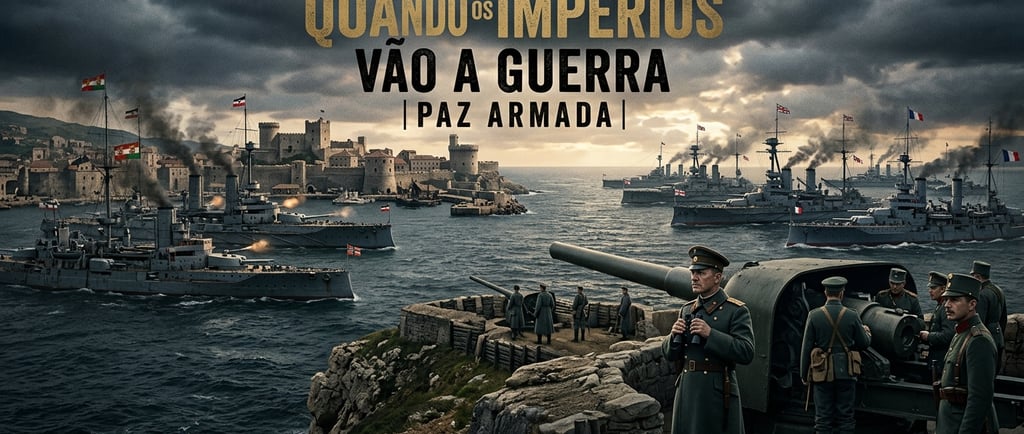
When Empires Go to War
What Nebuchadnezzar, Cyrus, Alexander and Rome Would Teach Us About America, Iran and the Myth of Modern Victory
History rarely repeats itself in the same costume, but it often performs the same play under different lighting.
The present confrontation between the United States and Iran—a mixture of military pressure, diplomatic maneuvering and strategic ambiguity—may appear unique to the modern world of satellites, sanctions and cyber warfare. Yet if the great empires of antiquity were able to observe this moment, they might find it strangely familiar.
The actors have changed, the technologies have evolved, and the language of war has been sanitized. But the underlying logic of power remains deeply imperial.
For thousands of years, empires have faced moments when war and negotiation intersect—moments when victory is uncertain, escalation dangerous, and compromise politically humiliating. What the ancients understood instinctively is that such impasses are not merely military dilemmas. They are tests of legitimacy, prestige and psychological dominance.
To understand the strategic dilemma of the present, it is illuminating to imagine how four archetypal imperial powers—Babylon, Persia, Macedon and Rome—might respond to a conflict like the current standoff.
The Babylonian Approach: Victory Through Fear
If the crisis were viewed through the eyes of Nebuchadnezzar II, ruler of ancient Babylonia, the answer would be brutally straightforward.
Babylon did not merely defeat enemies; it broke their political and spiritual will. War was theater, punishment and instruction all at once. Cities that resisted could expect sieges, destruction and the deportation of their elites.
The purpose was not simply conquest but demonstration. Empires, in the Babylonian worldview, survived not by occasional victory but by cultivating a reputation for overwhelming retaliation.
The destruction of Jerusalem during the Siege of Jerusalem illustrates this logic perfectly. The objective was not merely territorial control but symbolic domination—a message to the entire region about the consequences of defiance.
Applied to modern geopolitics, a Babylonian strategy would demand unmistakable submission. Military power would not merely degrade capability; it would publicly demonstrate the futility of resistance.
A ceasefire without visible humiliation would be seen not as peace but as unfinished business.
The Persian Model: Power Through Integration
The rulers of the Achaemenid Empire approached the empire differently.
Cyrus the Great and later Darius I perfected a subtler formula: conquer if necessary, but govern wisely afterward. Instead of destroying local cultures, Persia incorporated them into a broader imperial system of satrapies, tribute and administrative oversight.
The Persian insight was pragmatic: a functioning province produces far more wealth than a devastated one.
From this perspective, the objective of war is not annihilation but reordering. The defeated state need not disappear; it merely needs to accept new strategic limits.
If applied to a modern confrontation like that between Washington and Tehran, a Persian strategy would aim to preserve the adversary while neutralizing its capacity to challenge imperial order. The regime might survive, but its strategic autonomy would be constrained through agreements, inspections, and regional balancing.
Such an arrangement resembles what might be described today as a “coercive containment”—or what some analysts call a “armed peace.”
It is not reconciliation. It is stability enforced by hierarchy.
Alexander’s Method: Victory Through Momentum
Few conquerors embodied the psychology of warfare more dramatically than Alexander the Great.
Alexander understood that war was as much about perception as territory. Speed, audacity, and symbolism were his preferred weapons. Battles were decisive not only because armies were destroyed but because reputations were shattered.
The destruction of a strategic center could have effects far beyond the battlefield, spreading fear and discouraging resistance elsewhere.
An Alexandrian approach to a modern crisis would emphasize rapid, dramatic blows aimed at collapsing the enemy’s aura of power. Rather than prolonged standoffs, the aim would be a defining moment—a strike that convinces observers that the outcome of the conflict is inevitable.
Alexander’s campaigns often followed a pattern: defeat the enemy decisively, then incorporate elements of the conquered elite into the new imperial structure.
However, Alexander possessed something rare in modern politics—personal proximity to war. He fought alongside his soldiers, shared their risks and embodied the imperial narrative himself.
Modern leaders operate from command centers and speak through press briefings. Their legitimacy is constructed through narrative rather than physical presence.
The battlefield has become distant, but the psychological struggle remains.
The Roman Strategy: Peace Through Dominance
Among the ancient empires, none mastered the balance between war and order better than the Roman Empire.
Rome rarely rushed into decisive battles unless necessary. Instead, it applied pressure gradually—testing the enemy’s alliances, weakening peripheral actors and securing trade routes.
Roman leaders understood a fundamental principle of imperial stability:
Peace is not the absence of war; it is the absence of doubt about who holds power.
This philosophy eventually produced the famous Pax Romana. Contrary to the romantic image, it was not peace in the modern sense. It was stability maintained by overwhelming deterrence.
If Rome were managing today’s strategic tensions, its priorities would likely be clear:
secure maritime chokepoints
weaken hostile proxies
demonstrate credible retaliation
maintain negotiation channels
ensure that commerce flows under imperial protection
Such a strategy bears striking resemblance to modern doctrines of naval dominance and freedom of navigation.
In other words, despite modern rhetoric about international cooperation, many contemporary policies still echo Roman logic.
The Changing Language of War
One of the most striking differences between ancient and modern warfare lies not in strategy but in language.
Ancient armies marched in the name of gods—Marduk, Ahura Mazda, Zeus, Mars. Divine favor gave meaning to sacrifice and sanctified violence.
Modern states rarely invoke deities directly. Instead, they mobilize societies through secular ideals:
national security
sovereignty
democracy
resistance
international order
defense of civilization
These concepts perform many of the same psychological functions as the gods of antiquity. They provide moral justification, transform fear into mission and frame violence as necessary for a greater good.
The theological language of empire has not disappeared. It has simply been secularized.
The Paradox of Modern Victory
Perhaps the most profound transformation in warfare concerns the nature of victory itself.
In antiquity, victory was unmistakable. Cities fell, kings surrendered and monuments commemorated conquest. The outcome was visible and permanent.
Modern victory is far more ambiguous.
A successful campaign may mean delaying a nuclear program by several years, disrupting supply chains, or forcing an adversary to reconsider its strategic calculus. Success is measured not in captured capitals but in altered probabilities.
War has become less theatrical and more algorithmic.
Yet the underlying dynamics of prestige, deterrence and imperial influence remain remarkably consistent across centuries.
Lessons From the Empires
If the great empires of the past could comment on modern geopolitics, their observations might be surprisingly blunt.
Nebuchadnezzar might warn that hesitation invites defiance.
Cyrus might argue that sustainable power requires integration rather than destruction.
Alexander might insist that speed and symbolism decide wars.
Rome would likely remind us that commerce and security ultimately depend on credible dominance.
Together, they might offer a final, uncomfortable insight:
Modern powers still behave like empires. They simply avoid using the word.
Conclusion
The contemporary world often prides itself on having transcended the brutal politics of antiquity. International institutions, diplomatic norms, and global markets are frequently presented as evidence that humanity has moved beyond imperial rivalry.
Yet when crises erupt, the old logic quietly returns.
States seek prestige, deterrence and strategic advantage. Military power remains a tool of negotiation. And peace—when it emerges—often resembles what the ancients understood all too well:
not harmony, but equilibrium enforced by strength.
In that sense, the modern world may be less different from the ancient one than it likes to believe.
The empires have not disappeared.
They have simply learned to speak a more sophisticated language.
Glossary (Historical References)
Nebuchadnezzar II — King of the Neo-Babylonian Empire (6th century BCE), known for military campaigns and monumental architecture in Babylon.
Cyrus the Great — Founder of the Persian Achaemenid Empire, famous for combining conquest with relatively tolerant governance.
Darius I — Persian ruler who expanded and administratively organized the empire into satrapies.
Alexander the Great — Macedonian king whose rapid conquests created one of the largest empires of the ancient world.
Roman Empire — Mediterranean superpower whose military, administrative and legal systems shaped Western civilization for centuries.
By: Paulo Silvano (kernel text)
Powered by IA